
Moon Jae-in's visit will play a crucial role in exploring complementarities between India's Act East policy and South Korea's New Southern policy, says Dr Rahul Mishra.

Had India agreed to join the trade pact, Indian markets would have been flooded with cheap Chinese products.
According to the industry body, the 16-member RCEP has the potential to become one of the largest and economically dynamic trading blocs of the world, even bigger than the European Union.
"We see the Indian economy rebounding from our projected 6.1 per cent growth this fiscal year to something like 7 per cent in the next fiscal year (2020). We see the factors that will support growth, including monetary policy stimulus, working their way through the pipeline," Jonathan Ostry, Deputy Director, Asia Pacific Department at the IMF, told reporters.
The trade deal, officials say, can lead to an effective trading bloc against the China-led Regional Comprehensive Economic Partnership.

Surjewala said the party's 10-day agitation was formalised at a meeting in which Rahul Gandhi participated in, but neither he nor Sonia Gandhi would be participating in the state and district level programmes.

Prime Minister Narendra Modi on Thursday asserted that the world community must reject any linkage between religion and terrorism while formulating a "genuinely international" partnership in the fight against all forms of terror acts.
.jpg)
President Pranab Mukherjee has sought to counter criticism against the economic stimulus provided when he was the Finance Minister in 2009 and maintained that economy under him registered high growth rates.
India has been forcefully raising the issue of market access as well as protected lists of goods mainly to shield its domestic market as there have been fears that the country may be flooded with cheap Chinese agricultural and industrial products once it signs the deal.
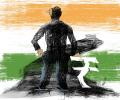
The employment situation remains dire. Whatever can be done to promote greater low-skill employment should be pursued aggressively, advises former chief economic adviser Shankar Acharya.
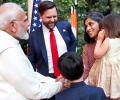
Prime Minister Narendra Modi and US Vice President JD Vance have expressed satisfaction with the progress made in negotiations for a bilateral trade agreement. The two leaders met in New Delhi and discussed a range of bilateral issues, including cooperation in energy, defense, strategic technologies, and other areas. They also exchanged views on regional and global issues of mutual interest.
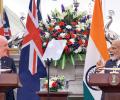
India and New Zealand have signed a pact to institutionalize their defence ties and vowed to boost cooperation in the Indo-Pacific. Prime Minister Narendra Modi raised concerns about anti-India activities by some illegal elements in New Zealand with his Kiwi counterpart Christopher Luxon. The two sides also signed six agreements to enhance cooperation in areas including education, sports, agriculture, and climate change. They also agreed to prepare a roadmap for cooperation in the defence industry sector and explore early implementation of cooperation in the digital payments sector.

Aiming to give fillip to India's Look East policy, Prime Minister Manmohan Singh is expected to announce new initiatives to take forward ties with the ASEAN by setting up a mission and appointing an ambassador for the 10-member grouping.
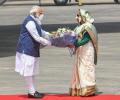
Bangladesh Prime Minister Sheikh Hasina is expected to travel to India on September 5 on a three-day official visit during which defence cooperation and regional stability are likely to be the focus of her talks with Indian counterpart Narendra Modi, an official said on Monday.

India and Italy inked 15 pacts and finalised an ambitious action plan to further expand their ties following a virtual summit between Prime Minister Narendra Modi and his Italian counterpart Giuseppe Conte that primarily focused on ramping up economic engagement.

The BJP's effort comes in the wake of Commerce and Industry Minister Piyush Goyal set to attend the eighth RCEP ministerial meeting in Bangkok from October 10 to 12.

For India to reach its ambiguous economic growth targets, it needs to be integrated into global trade pacts.

Among the current FTAs with significant trade deficits for India, five are with countries from the 10-nation Asean bloc. Exports to the 10 economies stood at $ 37.4 billion in 2018-19, up by 9% year on year. On the other hand, imports were higher at $ 59.31 billion, up by 25% from the previous year's $ 47.13 billion.

Some of these nations are India's biggest export market. India is also dependent on these countries to meet its energy needs.

India and ASEAN have relations "free from contests and claims" and believe in sovereign equality of all nations irrespective of size, and support for free and open pathways of commerce and engagement, Prime Minister Narendra Modi wrote in his column.
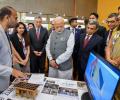
He said that India will work with Singapore to bring the Regional Comprehensive Economic Partnership to early conclusion. He also said the India-Singapore Comprehensive Economic Cooperation Agreement has been reviewed and the two sides will work to further upgrade it.

The visit of Park Geun-Hye to India, though a symbolic one, will certainly give a further impetus to the strategic partnership between the two countries says Rup Narayan Das.
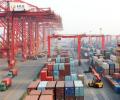
Chinese manufacturers are re-routing their products through the markets of other countries that India has Free Trade Agreements with.

Panagariya also stressed that India must continue the liberalisation of its top tariff rates and the country should not revert back to import substitution.

'The touchstone is reciprocity which will be applied to friends and foes alike.' 'It will be a bitter pill to swallow.'

Thailand expressed interest in the Indian defence industry and its experience and expertise in the field of defence R&D and production. Modi welcomed Thai investments in India in the potential areas under the 'Make in India' initiative, especially in the manufacturing sector, infrastructure development, tourism and hospitality facilities.

The road will help in transportation of goods and further development of SMEs in North East India
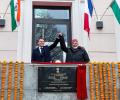
Prime Minister Narendra Modi and French President Emmanuel Macron have called for enhancing trade and investment ties between their countries and committed to further deepening their engagement in the Indo-Pacific. They discussed a full spectrum of bilateral relations, including key global and regional issues, and stressed the urgent need for reform in the United Nations Security Council. The leaders also underscored their commitment to ensuring the global AI sector can drive positive social, economic, and environmental outcomes.
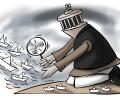
Panagariya also pointed out that COVID-19 pandemic may lead to integration of global labour market.

'Mere fundamentals will not do the trick,' cautions former commerce secretary Rahul Khullar.

Russia's unprecedented rapprochement with North Korea has raised concerns about the re-emergence of a Russia-China-North Korea alliance which could increase the probability of conflict on the Korean Peninsula, explains Dr Rajaram Panda.
As India goes into firming up trade deals with developed nations like Australia, the United Kingdom (UK) and the regional bloc, and the European Union (EU), it will have to be well prepared to negotiate on new-generation issues, such as data protection regulation, e-commerce, and environment. India is yet to negotiate pacts with its trading partners on these evolving issues since discussions between them have until now been largely focused on tariff and non-tariff barriers and the rules of origin. "We can no longer look at trade just as trade. We have to look at it in totality of global and regional conditions.

The agreement provides for extensive cooperation in the civil nuclear energy sector including in research and development for peaceful uses of nuclear energy, they said.

'Given China's past behaviour and their territorial claims, should we be sceptical regarding China's willingness to adhere to these agreements fully? The answer is yes.' 'As Ronald Reagan famously said in the context of the SALT talks, 'Trust, but verify!' India should also do the same.' 'This has already begun with foot patrolling, drones, satellite imagery and so on. India's military deployment did mirror China's and will continue to do so in the future.'

The Singapore Minister applauded Prime Minister Modi's effort to make India the manufacturing hub of the world.

His visit to India followed a few cancelled plans since he took office in July 2019 due to the coronavirus pandemic crisis, with the two leaders holding several virtual talks and eventually meeting in person on the sidelines of the COP26 climate summit in Glasgow last November.
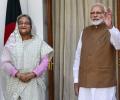
The pacts signed after Modi-Hasina talks provided for deeper cooperation between the two countries in areas of water resources, youth affairs, culture, education and coastal surveillance.

The Asean secretariat hopes the meet may be able to iron out existing wrinkles raised by India. Since there had been no significant progress on the matter over the past two years on most issues, New Delhi is yet to decide on the invite.

Reports (not denied by India) that the USA had 'for the first time provided real-time details to their Indian counterparts on the Chinese positions and force strength in advance of a PLA incursion' into Tawang at the LAC in December 2022, helping India thwart China's expansionist designs, show how operationally effective the USA-India friendship has become on the ground. A engaging excerpt from Sreeram Chaulia's must-read new book, Friends: India's Closest Strategic Partners.

Trade between Australia and India stands at around $15 billion a year, or just a tenth of that between Australia and China.
 © 2026 Rediff.com - Advertise with us - Disclaimer - Privacy Policy - Sitemap - Feedback - About us - Terms of use - Grievances